
 TrustScore 4.4 •
 English
  French
 German
 Italian
 Arabic
 Japanese
 Spanish
 Korean
 Russian
 Portuguese
 Dutch
Dutch
 Norwegian
 Finnish
 Swedish
 Hebrew
 Greek
Greek

Edward Hopper
Edward Hopper: Capturing the Solitude of American Realism
Early Life and Artistic Evolution
Edward Hopper was born on July 22, 1882, in Nyack, New York. His early interest in drawing led him to study at the New York School of Art, where he learned under prominent artists like Robert Henri, a leader of the Ashcan School. Initially drawn to illustration, Hopper struggled to find his voice as an artist. Multiple trips to Europe, especially Paris, profoundly influenced his style, helping him transition from the influence of Impressionism to developing his unique realist approach. By the 1920s, Hopper began to create works that explored themes of isolation and modern American life, establishing himself as a major figure in American realism.
Key Works and Signature Style
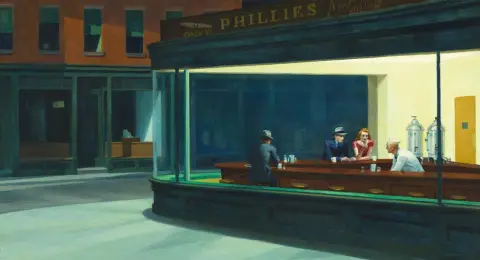
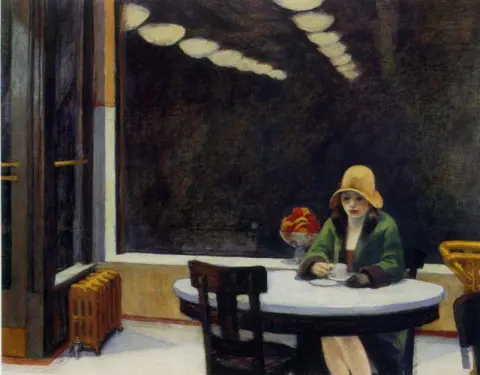
Hopper's most iconic work, Nighthawks (1942), is a compelling portrayal of loneliness set in an all-night diner bathed in eerie fluorescent light. The painting captures the quiet isolation of urban life, a theme that recurs throughout his work. Other celebrated pieces, such as Automat (1927) and House by the Railroad (1925), highlight his fascination with desolate settings and solitary figures, often depicting scenes of quiet contemplation. Hopper’s style combines architectural precision with a distinct use of light and shadow, creating compositions that are hauntingly still, yet filled with emotion.
Technique and Artistic Innovations
Hopper’s approach was rooted in a realist style, using oil paints to depict scenes with meticulous detail and atmosphere. He utilized light not only to define space but to convey psychological tension, with stark contrasts between shadow and light heightening a sense of detachment. His ability to capture the interior and exterior worlds simultaneously, especially through windowed scenes, offered viewers a glimpse into private moments. Hopper also frequently employed a muted color palette, which reinforced the somber, reflective tone of his compositions. His method of isolating figures within vast spaces gave his works a cinematic quality that predated and influenced film noir.
Legacy and Enduring Influence
Edward Hopper’s impact on both American art and popular culture is profound. His explorations of solitude, alienation, and urban life continue to resonate with audiences, influencing not only visual artists but filmmakers and writers as well. His ability to evoke emotion through minimalism has inspired generations, with directors like Alfred Hitchcock and Wim Wenders citing his work as an influence. Hopper’s paintings are now part of esteemed collections, such as the Whitney Museum of American Art, and continue to be celebrated for their ability to capture the silent drama of everyday life in America.
Reproductions of Edward Hopper’s work
Every piece in this collection is made to order, either as a print on synthetic canvas or hand-painted in oil, in the size and finish you choose. Oil paintings are created by a senior artist, and every piece is quality-checked with photo and video before it ships.
- View less




Open Your Art Inspiration Feed ! Subscribe for Exclusive Art News, Blog Insights, and Special Offers